Category: Uncategorized

  • Riding the Waves and Finding Stillness in the Dips

    Riding the Waves and Finding Stillness in the Dips

    The market must breathe before it can run. Don’t let a micro-movement steal your macro-conviction.

    I was looking at two charts yesterday that I’d traded the day before. I’d walked away with a modest profit from day trading, but seeing them rise again—mimicking the previous day’s gains—hit me with a flicker of regret. I’d missed the second wave. It’s clear these assets are in a “wavy” cycle right now.
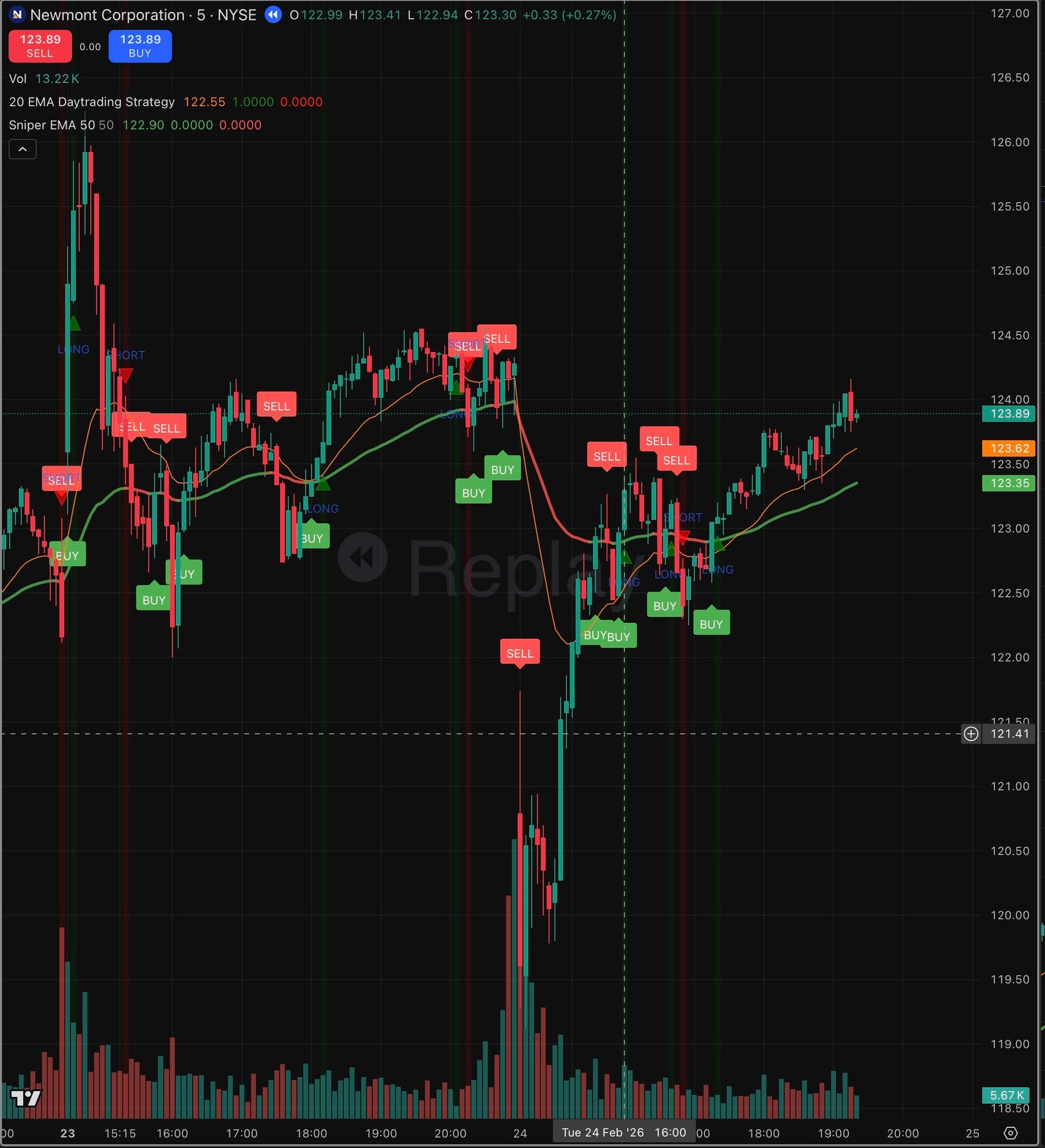
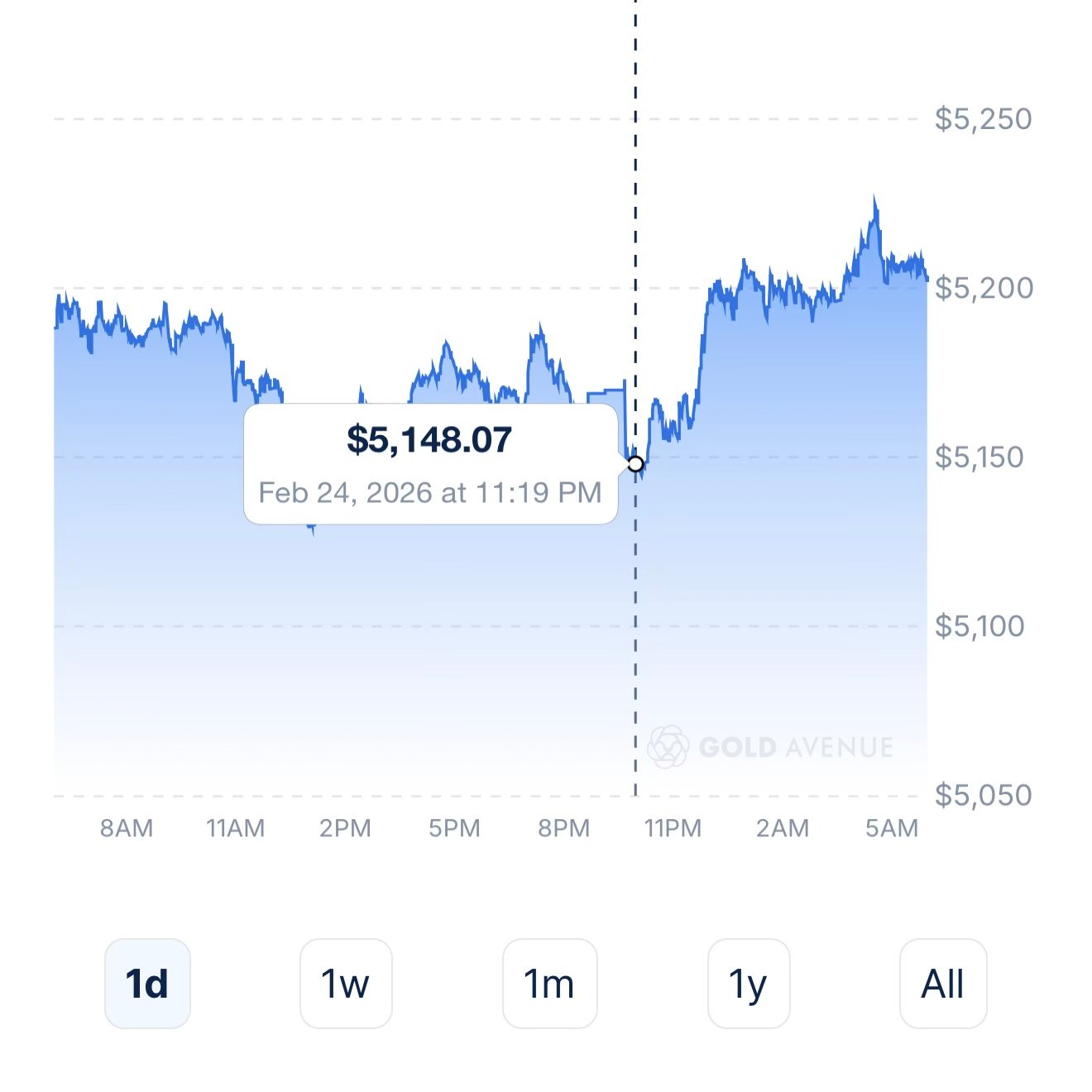
    Then, I turned my attention to gold. My mentor’s thesis is clear: gold is headed up, and when it moves, it will pull the mining companies with it. But in the moment, gold dipped. Even though I believe in the long-term play and the global tensions supporting it, that small downward swing sparked a moment of unease. I found myself questioning: Is it going lower? Did I miss something?
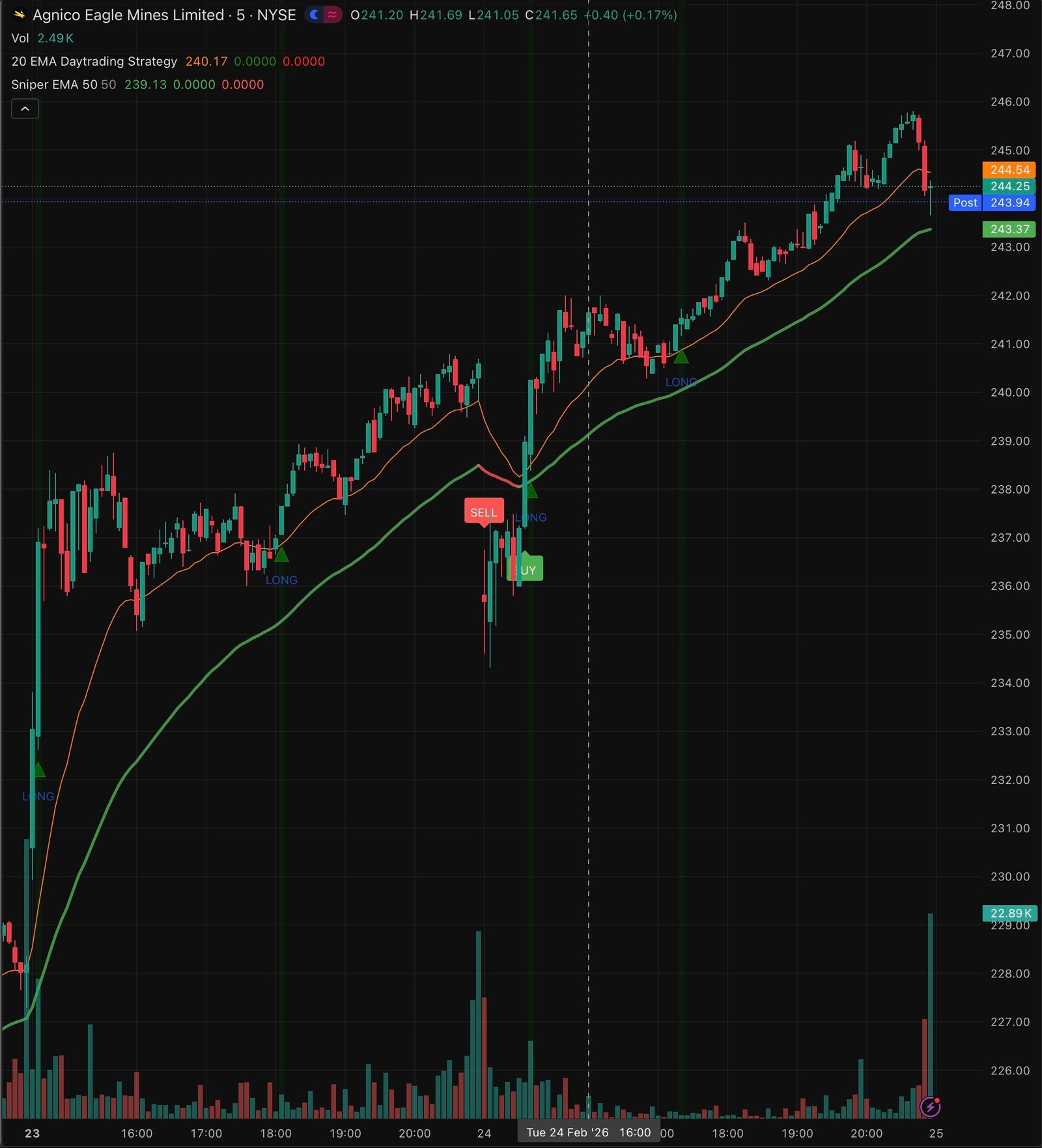
    Gold eventually recovered and moved back up, but the experience was a reminder of how easily micro-movements can affect your psychology. This is where awareness becomes the ultimate tool. Even when you have skin in the game and a firm belief in the asset, those small swings can still reach you. The challenge isn’t just predicting the market; it’s defending your peace of mind against the noise.
    The Zen Bull’s Lesson: How to Defend Your Peace

    If you find yourself feeling that “uneasiness” during a minor dip, here is how to stay grounded:

    • Zoom Out: Micro-movements are just the market breathing. If your long-term thesis (the global tension) hasn’t changed, the price wiggle shouldn’t change your mood.
    • Identify the Characters: Is the FOMO Monkey telling you that you’re losing out? Is the Paper-Handed Rabbit trying to make you jump too early? Recognizing these internal voices takes away their power.
    • The Cost of Admission: Volatility is the price we pay for the eventual “shoot up.” You cannot have the peak without sitting through the valley.
    • Label the Feeling: Instead of saying “I am worried,” say “I am observing a feeling of worry.” This small shift in awareness keeps you from acting impulsively.

  • Trading Log: MSFT Analysis (Feb 16, 2026)

    This is a story about when I just watched from the sidelines, testing my thesis that the stock would go up to $400 and defend itself from crashing.

    Market Context: MSFT is testing a major psychological floor at $400. Indicators show the trend is currently bearish, but a “relief bounce” is possible if support holds.

    Entry Zone: ~$400.15 – $401.00 (Watch for the open)

    Stop Loss: $396.50 (Protects against a “flush” to oversold levels)

    Target 1: $404.50 (Friday’s high/Initial resistance)

    Target 2: $413.00 (Major structural resistance)

    Technical Note: RSI is at 41, meaning it isn’t “oversold” yet. MACD remains bearish. Patience is key; don’t chase if it breaks $398.

    The Tale of the Polar Bull and the Ice Shelf

    Bulls and Bears face off on the critical $400 support level, eyeing the $413 peak in a high-stakes Arctic standoff.
    Bulls and Bears face off on the critical $400 support level, eyeing the $413 peak in a high-stakes Arctic standoff.

    In the frozen lands of the North, there lived a Polar Bear named Ursus and a rare, frost-coated Bull named Taurus. They stood on a massive ice shelf—the “400-Foot Ridge.”

    For weeks, Ursus the Bear had been jumping on the ice, trying to crack it and send everything into the deep, dark waters below. Every time the ice groaned at the 400-foot mark, Taurus the Bull would brace his hooves, pushing back against the weight, refusing to let the shelf shatter.

    Right now, they are locked in a standoff. The ice is thin (the RSI isn’t quite at the bottom), and the winds are howling (the MACD is bearish). Ursus wants to see one more crack to $396, while Taurus is waiting for the morning sun to strengthen the ice so he can charge back up toward the $413 Peak.

    The Lesson:

    A wise trader doesn’t jump onto the ice while it’s cracking. They wait to see if the Bull’s hooves hold firm at the ridge, or if the Bear finally breaks the shelf.

    Closing Thought: Respect the Ridge

    “Trading isn’t about being right; it’s about being prepared. Whether the Polar Bull holds the line at $400 or the Bear cracks the ice down to $396, the plan remains the same.

    In this journey, we don’t gamble on hope—we execute on levels. If the ice holds, we climb toward the $413 peak. If it breaks, we step aside with our capital intact, ready to fight another day.

    The market doesn’t care about our opinions, only our exits. Stick to the playbook, watch the volume at the open, and I’ll see you at the closing bell.”

    Respect the Ridge: My $400 Call was Right

    I had a strong feeling about this one.

    As I sat watching the pre-market charts for Microsoft (MSFT) this morning, all the noise was about the 17% drop we’ve seen so far in 2026. The bears were growling about AI spending and FTC probes, but I kept looking back at that $400 mark.

    I called it the “400-Foot Ridge,” and today, the market respected it. At least this time, my intuition was spot on.

    The Playbook in Action:
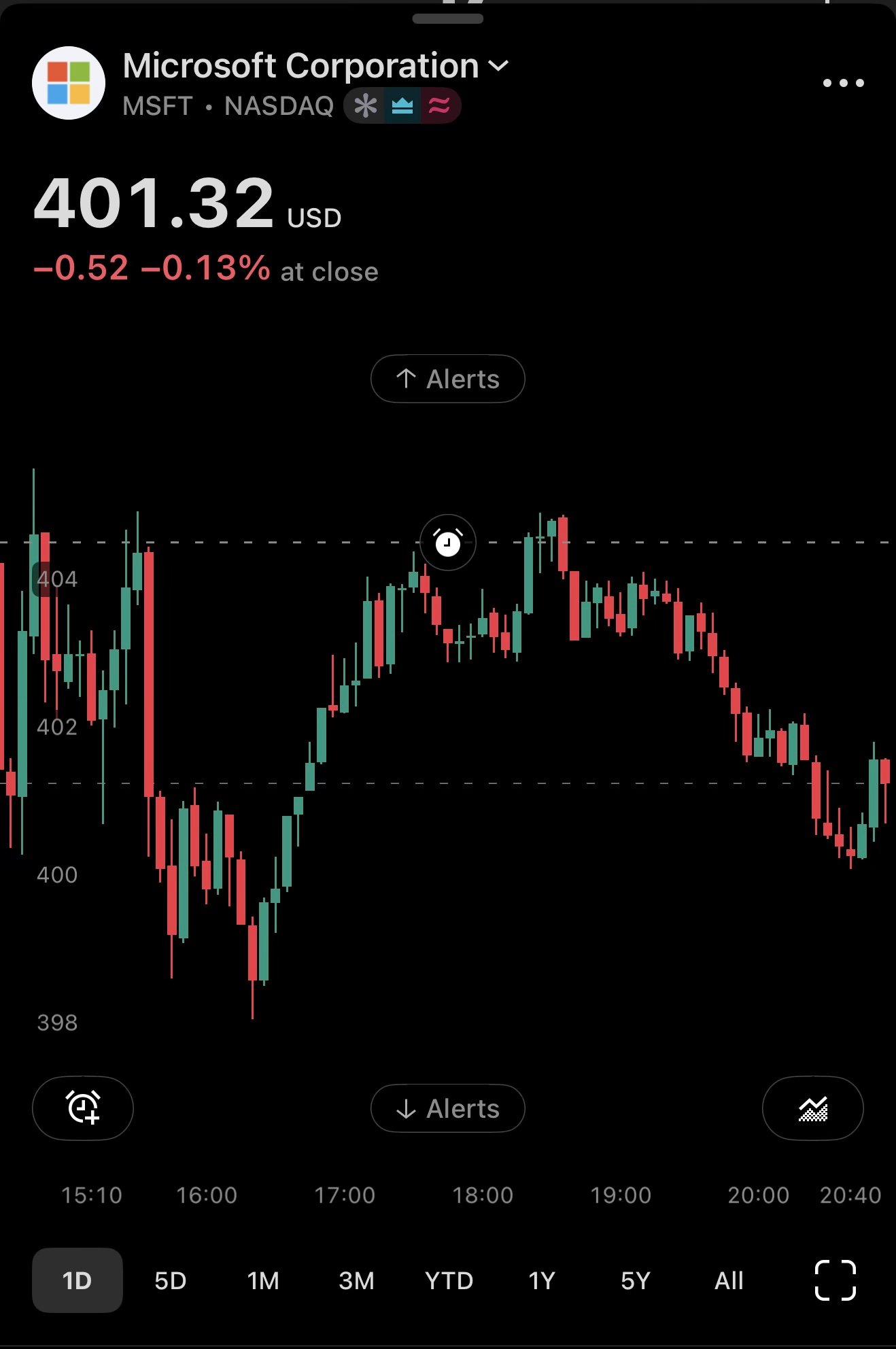
    • The Open: MSFT opened right at $401.32, holding steady as buyers stepped in to defend the floor.
    • The Validation: While the technicals like the MACD are still showing a bearish trend, the price action told a different story today. We didn’t see the “flush” that many feared.
    • The Discipline: My plan was clear—if we held $400, the target was $404.50. We reached an intraday high of $405.54 during the last session, proving that the bounce was real.

    My Takeaway

    Trading is often a battle between what you see on a screen and what you feel in your gut. Today, they aligned. Microsoft is trading at roughly 25x earnings, which is the cheapest it’s been in quite some time.

    It feels good to be right, but I’m staying disciplined. The $396.50 stop stays in place because the “Polar Bear” isn’t out of the woods yet, but for now, the Polar Bull is standing its ground.

  • My First $1,000 Trade: When the “Snow” Turned Red and My Mentor Stepped In

    My First $1,000 Trade: When the “Snow” Turned Red and My Mentor Stepped In

    The Thousand-Dollar Heartbeat


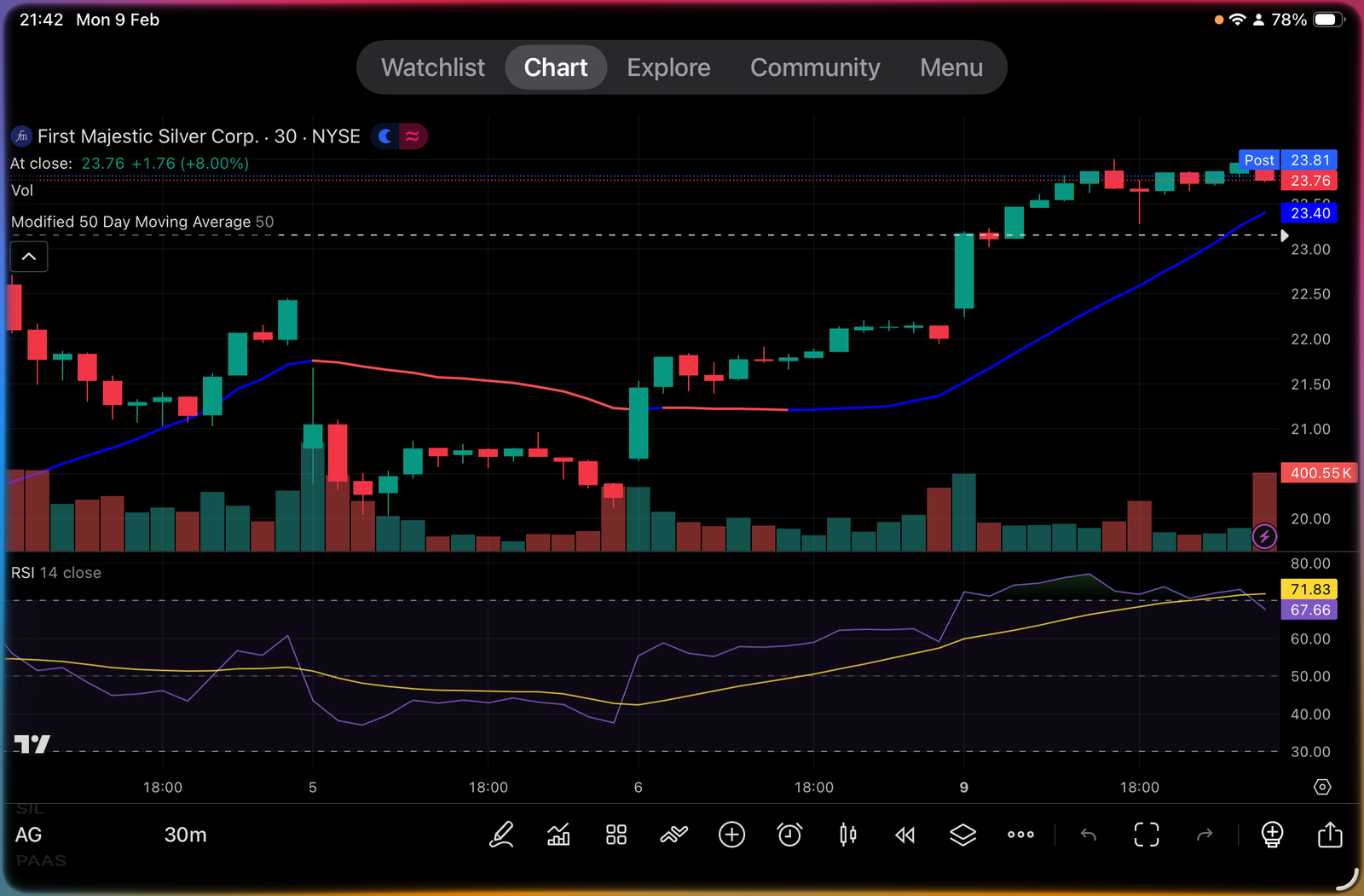
    They say you never forget your first real trade. I certainly won’t. I decided to move beyond the “paper trading” phase and invested $1,000 of my hard-earned money in First Majestic Silver (AG).

    When I noticed the price dropping to $23.67, my heart raced. In that moment, I realized that if I didn’t control my breathing, the market would control me.

    I used a technique I’ve practiced for years: Box Breathing.

    By taking four seconds to inhale, four seconds to hold, and four seconds to exhale, I forced my nervous system to calm down.

    I wasn’t just a trader anymore; I was a practitioner of Omstock. I stopped reacting to the red candles and started responding to my strategy.

    This is the “Mind Control” I plan to teach—because the biggest obstacle in any trade isn’t the stock; it’s the person behind the screen.

    Up until that moment, numbers on a screen felt like a game. But the second I hit “Buy,” something shifted. I felt it in my chest—a physical reaction. Suddenly, every tick of the price wasn’t just data; it was my money.

    When the “Snow” Turned Red

    I was watching the charts, and everything looked green. I was up about $22—not a significant amount, but a win nonetheless.

    Then, the market did what it does best: it changed.

    I saw a red candle with a long “fuse” (upper wick) pointing straight up. To me, it looked like a warning.

    The price dropped from $23.80 to $23.67 in an instant. That’s when the “Day Trader Panic” started to set in. My instinct was to run, but my Mentor stepped in to help me “read the snow.”

    Lesson 1: Mastering the Art of Scaling Out

    Instead of panicking and selling everything, my mentor and I discussed a strategic move: Scaling Out.

    • The Plan: Sell half of my shares (21 shares) to secure an $11 profit.
    • The Psychological Advantage: By securing that $11, I felt like I had “paid for my lunch,” making the remaining shares feel lighter and more manageable.

    Lesson 2: The Unexpected “Stop Loss”

    This is where the real learning occurred. My mentor advised me to set a Stop Loss at $23.33 (my break-even price) for the remaining shares. I believed this was a prudent safety net.

    However, I encountered a technical issue: The shares sold immediately upon submission.

    What I discovered: If the market price is already approaching your “Stop Price” when you submit the order, it triggers instantly.

    This was a “training wheels” mistake, but it was crucial in teaching me that in a fast-moving market, your safety net needs room to breathe.

    The Final Outcome

    By the end of the day, I had realized a profit of +€4.48.

    While this may not have been the thousands of dollars advertised in “get rich quick” YouTube videos, it was a significant victory. I successfully:

    • Navigated a $1,000 position without succumbing to emotional impulses.
    • Developed the ability to interpret “Price Rejection” on a 1-minute chart.
    • Managed a technical error and still emerged in the green.

    My Advice to Aspiring Traders

    Trading should never be done alone. Whether it’s with a human mentor or an AI, having someone to provide logical guidance when emotions run high is the difference between gambling and trading.