Tag: Stop Loss Strategy

  • The Cost of Listening to the Noise: A Lesson in “Paper-Handed” Stops

    The Cost of Listening to the Noise: A Lesson in “Paper-Handed” Stops

    There’s a particular pain in realizing you’re completely right about a direction, yet walking away empty-handed. That’s how I felt. I was strongly convinced about three stocks: Freeport-McMoRan (FCX), Alcoa (AA), and Cameco (CCJ). My intuition, sector research, and online sentiment all pointed toward a positive outcome. I invested $10,000 in each, expecting results within a month.

    And I was right. But I didn’t get to see the gains.

    The Trap

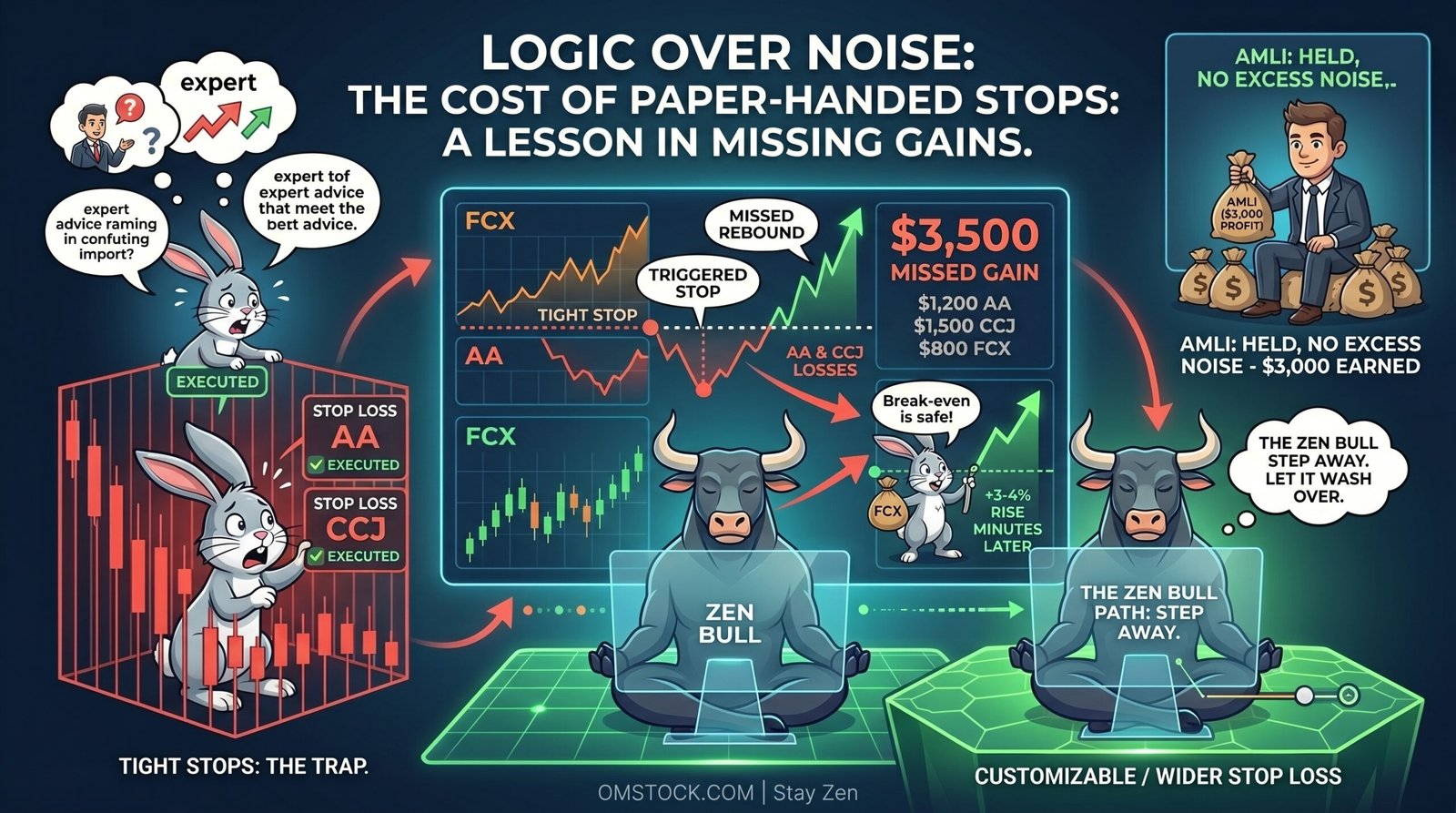
    Despite my instincts, I followed some “expert” advice and set my stop-losses too tight. I thought they knew better than me. I let the Paper-Handed Rabbit take control, creating a cage so small the trades couldn’t breathe.

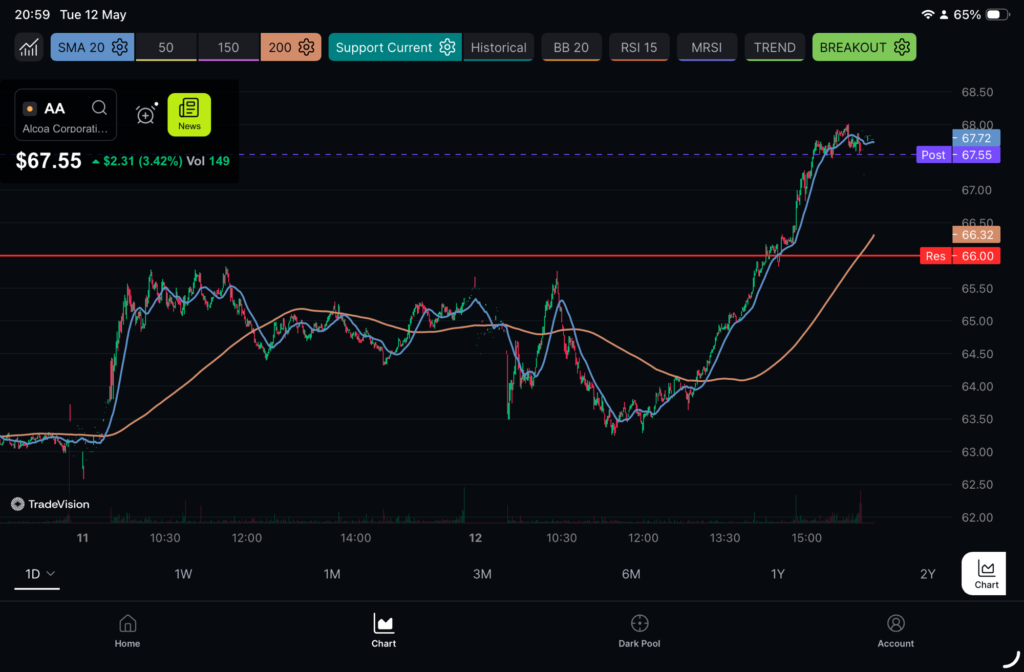
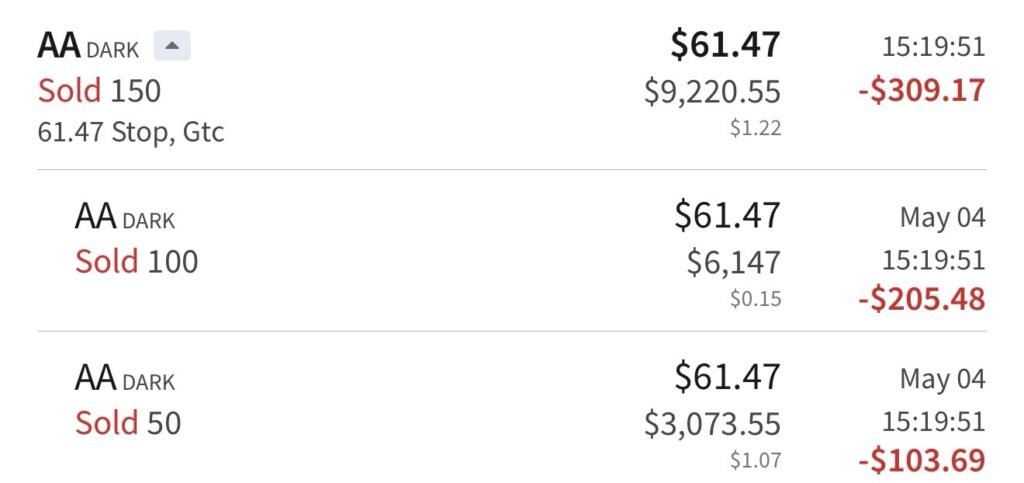
    • Alcoa (AA): Hit the tight stop early, exiting with a loss before the trend even began.
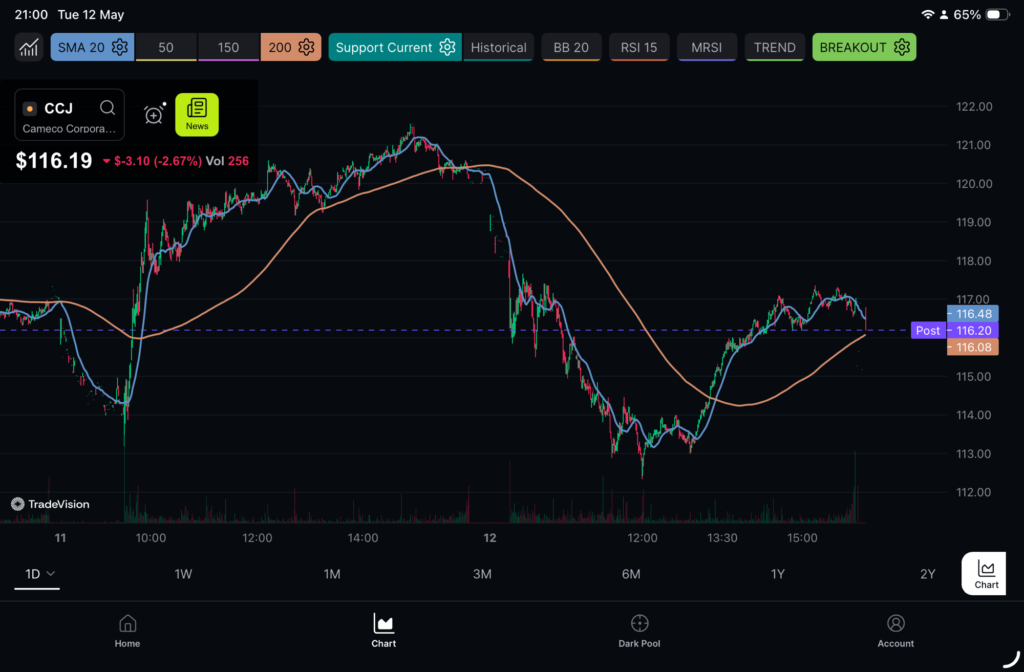
    • Cameco (CCJ): This one hurt the most — it dipped sharply, triggered my stop, then rebounded quickly. I watched from the sidelines as it soared without me.
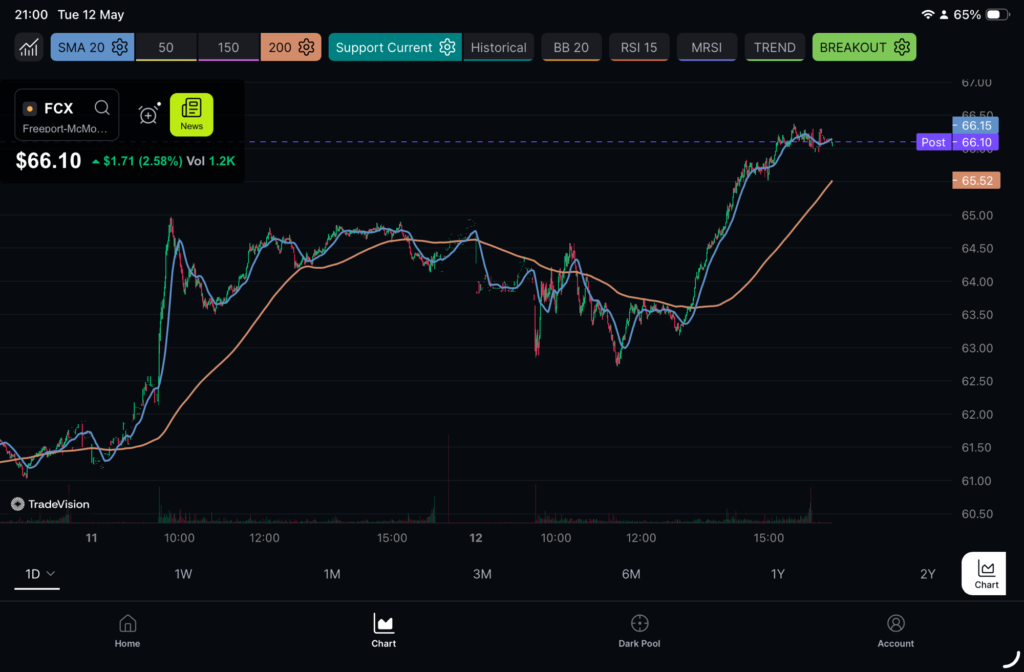
    • Freeport (FCX): The only winner, showing a profit. But frustration with the others led me to sell just to break even.

    Minutes later, Freeport rose 3–4%.
    The Math of Frustration

    Had I not let those “experts” convince me to keep stops narrow, I’d be up $3,500 now. Instead, I’m even. Initially, that $3,500 would have been a huge boost, especially during slow work periods.

    It’s ironic. I started trading Amaroq Minerals (AMLI)—a junior gold miner in Greenland—without knowing much, through a local bank. I simply held on, invested $10,000, and earned $3,000 in a month. Back then, I didn’t “know too much.” Now, I thought I did, and the FOMO Monkey and external advice clouded my judgment.

    The Path Forward

    It’s disappointing and heavy. But instead of revenge trading or battling the market, I’m choosing the only path a Zen Bull takes: stepping away for a day or two. I’ll sit with my emotions, let them wash over me, stay with them, and release them when I’m ready. The market will still be here. Right now, I need to regain my conviction and quiet the outside noise.

    Stay Zen.
  • The “Zen Bull” Gets Clipped: A Lesson in Beta and “Noise”

    The “Zen Bull” Gets Clipped: A Lesson in Beta and “Noise”

    Sometimes, the market has a way of checking your ego, and yesterday, it handed me a classic lesson. I was stopped out of my Alcoa (AA) position, and in hindsight, it was a mistake on my part. Not because the trade idea was poor, but because I overlooked the “math of the swing.”

    I was betting on a one- month recovery but set my stop loss as if I were trading a slow- moving utility stock. I forgot to consider the Beta.

    What is Beta, and why did it affect my trade?

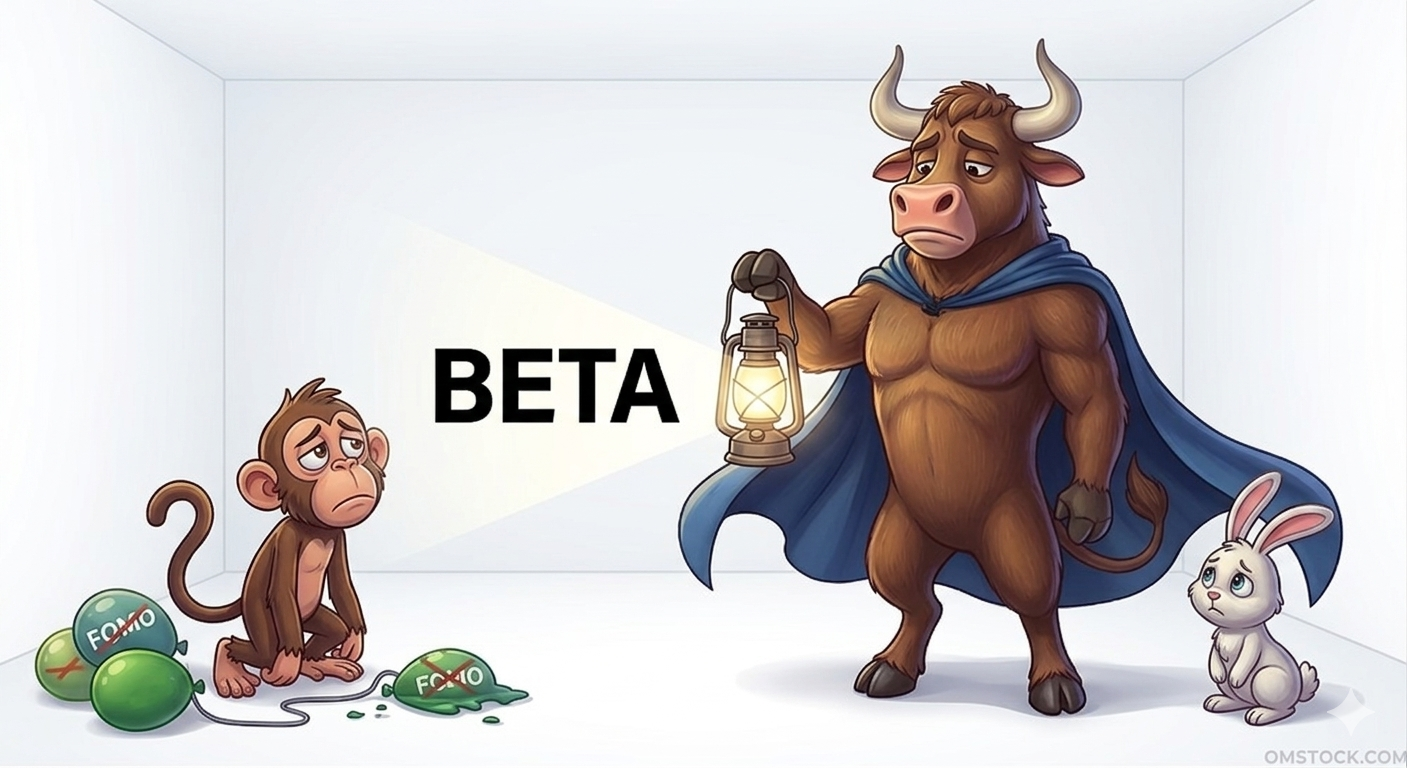
    In my trading experience, I usually focus on the “Zen Bull” thesis—the overall picture. But the Beta number indicates the stock’ s volatility.

    • Market Average: A Beta of 1. 1.0 means the stock moves in sync with the market.
    • Alcoa’ s Beta: AA has a Beta of 1. 7.

    This indicates Alcoa is 70% more volatile than the average stock. If the market sneezes, Alcoa catches a cold; if the market drops 1%, Alcoa could drop 1. 7%. By setting a tight stop loss on a high- Beta stock, I set myself up for a trap. The “noise” of a typical Tuesday morning was enough to trigger my exit, even though my one- month outlook was unchanged.

    The Mistake: I didn’ t give the stock enough “room to breathe.” High Beta calls for a wider safety margin.

    How to find Beta (Don’ t skip this step!)

    If you’ re using Omstock. com, avoid the same mistake. Here’ s how to find Beta before investing:

    1. Your Broker App: Many professional platforms like Interactive Brokers display Beta in the “Key Statistics” or “Instrument Details” section for any stock.
    2. Financial Sites: Visit Yahoo Finance or Google Finance, input the ticker (e. g., AA or CCJ), and find Beta listed under ” Beta (5 Y Monthly) ” on the main summary page.
    3. The “Vibe” Check: A Beta above 1. 1.5signals a “jumper”- expect larger swings.

    Moving Forward

    I won’ t let the FOMO Monkey influence me after this stop- out. I see this as a lesson for my Omstock journey. Next time, I’ ll check the Beta first and adjust my position size so I can handle a wider stop without risking too much.

    The Zen Bull remains calm, even when clipped. Onward to the next trade.